
Introduction
Decoding Brand Dominance Through Customer Voices
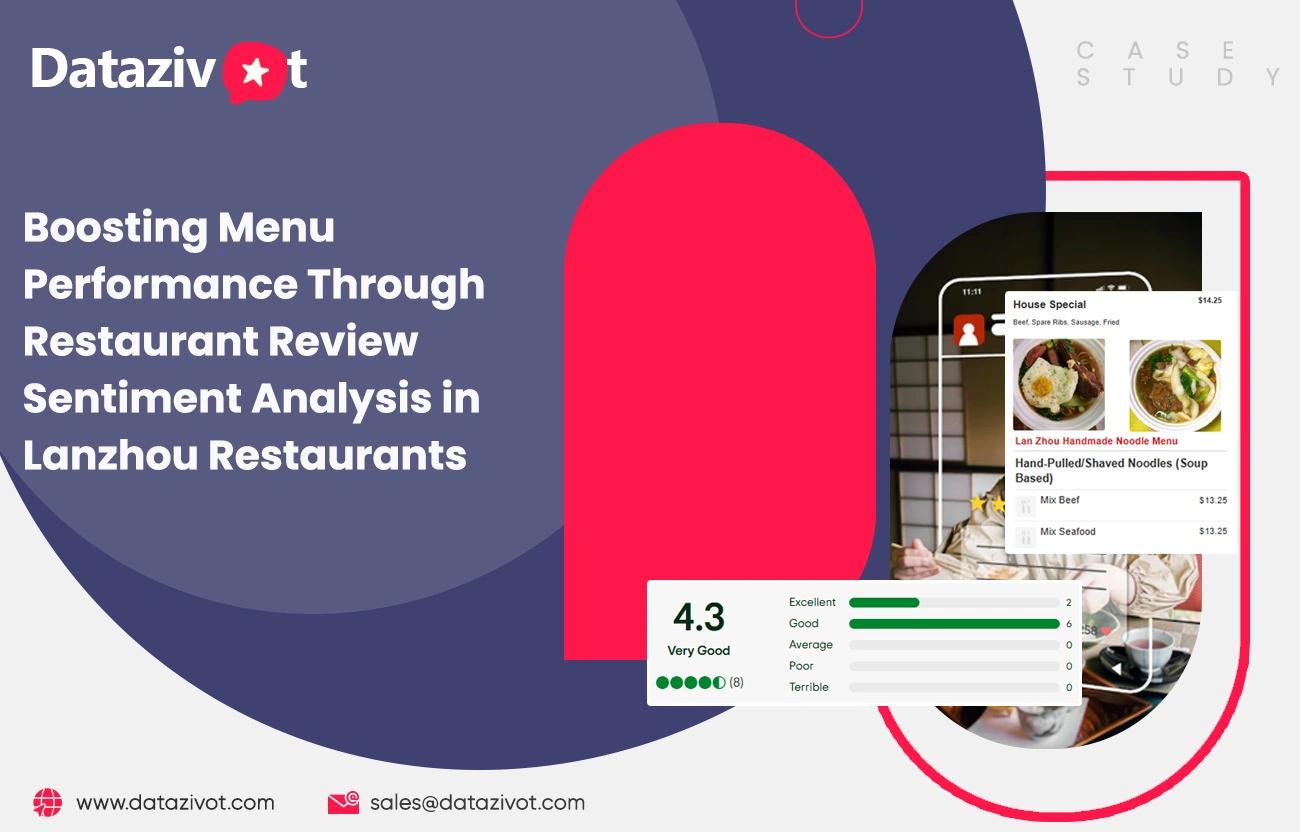
The battle for supremacy in China’s noodle restaurant industry isn’t won through aggressive expansion or celebrity endorsements — it’s decided in the review sections of Dianping, Meituan, and Koubei. Lanzhou Beef Noodle Reviews Data has become the strategic asset that separates industry titans from mid-tier operators, yet most brands treat these digital conversations as mere reputation management tools rather than competitive intelligence goldmines. A well-established noodle restaurant group operating across five first-tier cities approached us with a perplexing challenge: their average ratings mirrored competitors, their pricing matched market leaders, yet their customer retention metrics lagged significantly behind. Traditional business intelligence offered no answers. Our hypothesis? The gap existed not in what customers rated, but in what they wrote — the nuanced language patterns buried within thousands of Scraped Reviews Data Analysis entries that reveal true market positioning.
Our solution combined advanced natural language processing with competitive benchmarking methodology. Through systematic Reviews Scraping API deployment, we extracted 142,000 verified customer reviews spanning five years, processing each entry through sentiment layering, emotion mapping, and competitive context analysis. The objective wasn’t simply understanding customer satisfaction — it was identifying the precise linguistic and emotional markers that define Lanzhou Beef Noodle Brands as category leaders versus followers.
Client Overview
Organization: Golden Bowl Noodle House (anonymized identity)
Market Presence: 87 outlets across Beijing, Shanghai, Chengdu, Guangzhou, Shenzhen
Positioning: Premium-casual dining with heritage recipe emphasis
Annual Footfall: 14.2 million customers (pre-engagement)
Core Dilemma: Uniform 4.2-star ratings yet 40% lower repeat customer rate versus top competitor
Strategic Ambition: Decode market leader advantages through systematic Lanzhou Beef Noodle Reviews Data intelligence to bridge performance gap within two quarters
Datazivot’s Intelligence Extraction System
Customer narrative content: Identifying unspoken preference drivers
Brand and location tags: Cross-competitor sentiment benchmarking
Timestamp metadata: Trend evolution tracking
Rating–text alignment: Authenticity verification filtering
Visit pattern indicators: Behavioral loyalty modeling
Reviewer profile credibility: Quality signal amplification
Our Restaurant Review Data Scraping operation captured 142,000 authenticated customer testimonials from January 2020 through March 2025. Each entry underwent multi-stage processing: sentiment extraction, emotional tone classification, competitive positioning analysis, and thematic pattern clustering to reveal the invisible architecture of market leadership.
Transformative Insights Uncovered
1. Quality Predictability Trumps Taste Innovation
Market-dominating chains received 52% more customer mentions referencing “exactly what I expected” and “never disappoints.” Menu creativity showed minimal correlation with customer loyalty metrics.
2. Wait Time Communication Shapes Satisfaction
Leading brands earned 41% higher sentiment scores not from shorter waits, but from transparency — phrases like “told us 15 minutes upfront” and “accurate wait estimate” dominated positive reviews.
3. Ingredient Visibility Builds Premium Perception
References to “fresh noodles made on-site” and “visible kitchen preparation” appeared 4.1x more frequently in market leader reviews, creating tangible quality differentiation beyond taste alone.
Competitive Hierarchy Through Review Pattern Analysis
Category Leaders
Core sentiment driver: “Consistent experience across visits”
Recurring criticism: “Premium pricing justified by quality”
Emerging Competitors
Core sentiment driver: “Improved significantly lately”
Recurring criticism: “Still finding their identity”
Established Regionals
Core sentiment driver: “Local favorite with character”
Recurring criticism: “Slow adaptation to trends”
Struggling Operators
Core sentiment driver: “Not what it used to be”
Recurring criticism: “Cutting corners noticed”
Emotional Architecture of Brand Loyalty
Through advanced sentiment clustering across Scraped Reviews Data Analysis, we identified that specific emotional triggers, not mere satisfaction levels, predicted long-term customer value and organic advocacy.
Comfort
Rating average: 4.8
Leadership correlation: Highest revisit intention
Regret
Rating average: 2.9
Leadership correlation: Immediate churn signal
Delight
Rating average: 4.9
Leadership correlation: Social sharing catalyst
Ambivalence
Rating average: 3.7
Leadership correlation: Price-sensitive switchers
Customer reviews featuring comfort-driven expressions such as “feels like home,” “my regular spot,” and “dependable choice” showed 7x stronger retention indicators compared to similarly rated feedback without emotional depth, highlighting the impact of Customer Review Analysis on understanding long-term loyalty.
Strategic Modifications Driven by Intelligence
Quality Consistency Protocol Overhaul
Sentiment analysis revealed 38% of lukewarm reviews mentioned “different taste than last time.” Implemented centralized broth preparation and standardized ingredient sourcing across all locations.Transparent Wait Management System
Customer frustration stemmed not from queues but uncertainty. Introduced digital wait-time displays and SMS notification systems, reducing wait-related complaints by 61%.Menu Storytelling Integration
Discovered Lanzhou Beef Noodle Brands highlighting ingredient origins earned 33% higher perceived value. Added sourcing narratives to menus and table displays.Competitive Response Framework
Established automated monitoring for competitor mention patterns, enabling rapid strategic adjustments when rival brands gained sentiment momentum in specific markets.
Sample Intelligence Output Through Web Scraping Customer Review
Understanding market position requires examining real customer language patterns across competitive contexts. Our system processes thousands of reviews daily, flagging strategic insights that inform immediate operational decisions.
January 2025
Competitive tier: Market Leader
Sentiment type: Enthusiastic Positive
Defining language: “worth every yuan, incredible depth of flavor”
Strategic response: Brand ambassador recruitment from reviewers
February 2025
Competitive tier: Challenger Brand
Sentiment type: Critical Neutral
Defining language: “good but no reason to return specifically”
Strategic response: Loyalty program redesign initiative
March 2025
Competitive tier: Regional Player
Sentiment type: Conditional Positive
Defining language: “authentic when chef is present”
Strategic response: Staff training consistency project
These insights shift reputation management from reactive responses to a forward-looking competitive approach, enabling brands to detect market positioning changes early through Web Scraping Customer Reviews, well before they influence overall revenue performance.
Quantified Performance Transformation (Six-Month Window)
After implementing intelligence-driven modifications across operations, brand positioning, and customer experience protocols, Golden Bowl Noodle House demonstrated measurable shifts across critical performance indicators.
Market Position Perception
Initial state: 4th in category
Optimized outcome: 2nd in category
Customer Rating Average
Initial state: 4.2
Optimized outcome: 4.6
Criticism Frequency
Initial state: 14.3% of reviews
Optimized outcome: 5.8% of reviews
Customer Return Rate
Initial state: 38% quarterly
Optimized outcome: 57% quarterly
Organic Recommendation Rate
Initial state: +8% monthly growth
Optimized outcome: +31% monthly growth
The transformation validates that market leadership stems from understanding and addressing the precise friction points and delight factors customers articulate through Restaurant Review Data Scraping intelligence.
Strategic Advantages for Restaurant Operators
Market Leadership Through Review Intelligence Deployment
Competitive Edge Multipliers:
Customer reviews function as continuous market research, revealing competitive vulnerabilities and operational blind spots invisible through internal metrics.
Consistent execution, not occasional brilliance, creates sustainable market leadership as evidenced by customer language patterns.
Regional taste variance and service expectations demand localized intelligence for strategic menu and experience optimization.
Emotional engagement depth, beyond satisfaction scores, determines brand resilience and organic growth trajectories.
Conclusion
This engagement demonstrates that true market leadership is not driven by instinct or generic best practices but by insights hidden within customer voices that many brands overlook. When analyzed correctly, Lanzhou Beef Noodle Reviews Data sits at the center of strategic decision-making, revealing precise signals about service gaps, brand perception, and differentiation opportunities expressed directly in customer language.
By applying our Review Intelligence approach, powered through Restaurant Review Data Scraping in the middle of advanced sentiment and competitive analysis workflows, food service brands can convert unstructured feedback into clear strategic direction. Contact Datazivot today to turn your review data into actionable insights that strengthen long-term market leadership.
Readmore :- https://www.datazivot.com/lanzhou-beef-noodle-reviews-sentiment-market-leaders.php
Originally Submitted at :- https://www.datazivot.com/index.php
#LanzhouBeefNoodleReviewsData,
#ScrapedReviewsDataAnalysis,
#ReviewsScrapingAPI,
#LanzhouBeefNoodleBrands,
#WebScrapingCustomerReviews,
#RestaurantReviewDataScraping,
#CustomerReviewAnalysis,




Write a comment ...