
Introduction
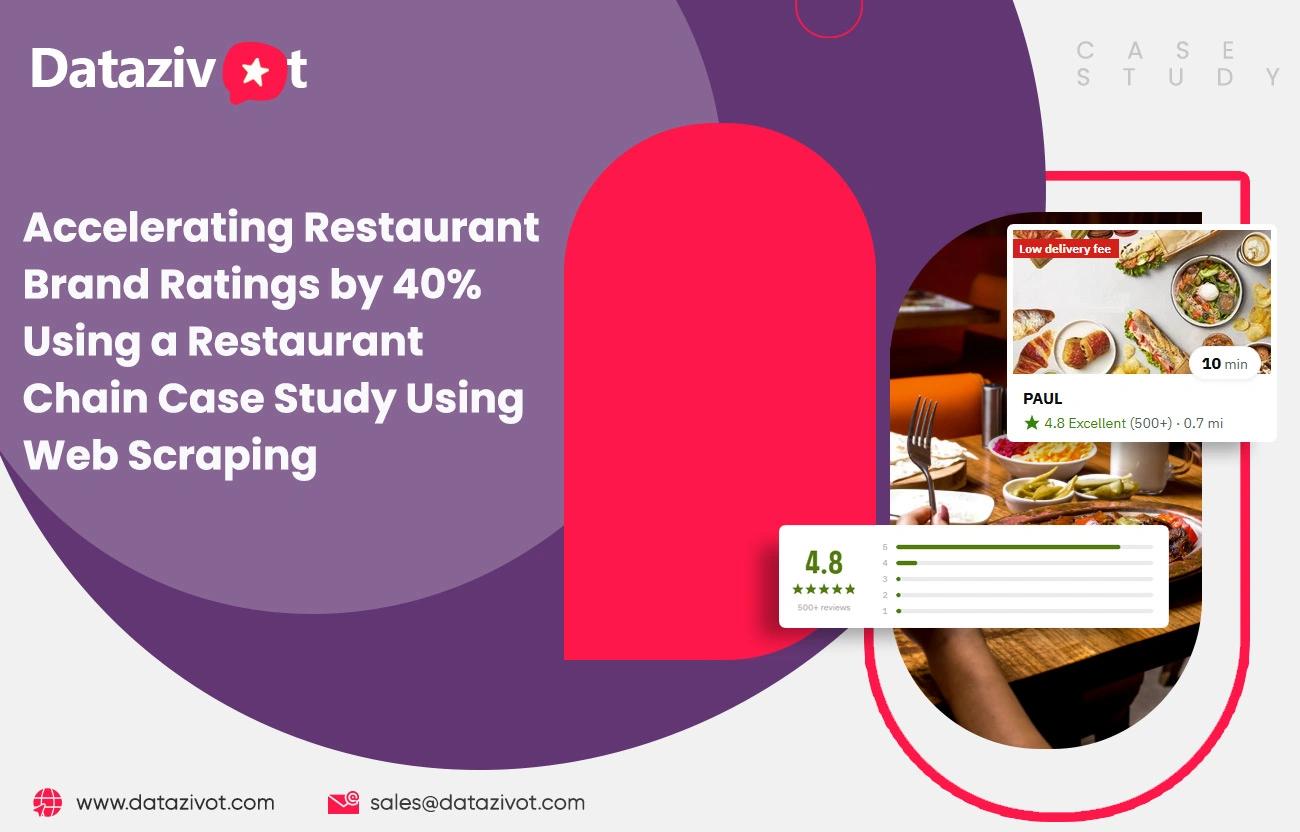
The restaurant industry thrives on perception, experience, and word-of-mouth reputation. While traditional competitive analysis focuses on menu comparisons and pricing strategies, the most valuable intelligence lies within thousands of unfiltered customer reviews posted daily across digital platforms. Food and Restaurant Reviews Data Scraping enables restaurant operators to systematically access this wealth of competitive intelligence that reveals operational vulnerabilities, service inconsistencies, and unfulfilled customer expectations across their competitive landscape.
Modern diners document every aspect of their dining experiences online — from greeting quality to dessert presentation, from parking challenges to restroom cleanliness. These narratives contain strategic signals that most restaurant operators never analyze beyond their own establishment. Identifying Competitor Gaps Using Restaurant Reviews transforms these scattered data points into a comprehensive competitive advantage framework, revealing precisely where rival establishments underperform and where market opportunities remain unexploited.
Their objective was clear: systematically analyze competitor performance through the lens of verified customer feedback to identify strategic positioning opportunities. Our team executed Large-Scale Restaurant Review Scraping across 62 competing establishments, processing 210,000+ customer reviews spanning three years to construct a detailed competitive weakness map that would drive strategic decision-making. The ability to Food and Restaurant Reviews Data Scraping enabled precise competitive benchmarking at scale.
The Client

Organization: Velocity Bite Restaurant Collective (identity protected)
Geographic Coverage: Baltimore, Washington D.C., Richmond
Concept Portfolio: Fast-casual bowls, artisan sandwich shops, specialty coffee cafés
Core Business Challenge: Difficulty differentiating in saturated urban markets with similar concept competitors
Strategic Objective: Develop data-backed competitive positioning strategy through systematic competitor review analysis
Datazivot’s Multi-Source Review Aggregation System
Complete review narratives
Intelligence application: Thematic pattern recognition and pain point identification
Establishment identification
Intelligence application: Competitor-specific performance profiling
Service category and pricing tier
Intelligence application: Market segment opportunity analysis
Rating scores with publication dates
Intelligence application: Performance trajectory and momentum tracking
Dining context indicators
Intelligence application: Occasion-based expectation mapping
Specific item references
Intelligence application: Product-level gap identification
Our analytics team implemented Restaurant Reviews Data Scraping protocols across Google Business, Yelp, TripAdvisor, and Facebook Reviews, accumulating 210,000+ authenticated customer reviews from January 2022 through March 2025. The scope deliberately targeted VelocityBite’s direct competition — establishments operating within 2.5-mile proximity, comparable average check sizes ($12-$18), and overlapping customer demographics.
The smart tools to Scrape Restaurant Reviews for Market Research process incorporated sophisticated validation layers to prioritize high-signal feedback: confirmed purchaser verification, substantive commentary (minimum 100 characters), and explicit mentions of service attributes, product quality, or operational elements.
Competitive Vulnerability Patterns Revealed Through Data Analysis

Value Perception Misalignment
Analysis of 18,500 reviews examining price-to-quality perceptions revealed a key competitor blind spot. Using Reviews Scraping API, these recurring patterns were systematically identified, offering actionable insights into consumer expectations versus pricing.
Technology Integration Failures
Across 12,400 reviews mentioning digital ordering experiences, competitor establishments demonstrated systematic failures in mobile app functionality, order accuracy from third-party platforms, and pickup coordination. Customer frustration centered on “app crashed during checkout,” “order missing items,” and “no notification when ready” — signaling an underserved need for reliable digital experiences.
Consistency Gaps Across Locations
Analysis showed 2.3-star rating spreads between best and worst-performing locations within single brands, with customers explicitly noting “nothing like the original location” and “quality depends which store you visit.” Restaurant Review Analytics for Competitive Insights revealed that multi-location competitor brands suffered significant quality variance between establishments.
Staff Knowledge Deficiencies
Review mining uncovered 9,200+ mentions of employee inability to answer basic menu questions, particularly regarding ingredient sourcing, allergen information, and preparation methods. This knowledge gap created negative experiences for health-conscious diners and those with dietary restrictions — a growing market segment competitors were inadvertently alienating.
Competitor Performance Matrix by Market Position
Through systematic Restaurant Competitor Analysis, we constructed weakness profiles across competitor archetypes:
Premium Bowl Concepts
Strength area identified: “Ingredient quality visible”
Vulnerability exposed: “Customization limited, upcharges excessive”
Traditional Sandwich Chains
Strength area identified: “Familiar reliable menu”
Vulnerability exposed: “Atmosphere outdated, no modern design”
Health-Focused Quick Service
Strength area identified: “Nutritional transparency”
Vulnerability exposed: “Taste sacrificed for health claims”
Coffee-Forward Cafés
Strength area identified: “Ambiance conducive to work”
Vulnerability exposed: “Food options minimal and uninspired”
Customer Emotional Response Mapping
Applying sentiment analysis algorithms to competitor review corpus revealed emotional triggers linked to specific operational dimensions:
Frustration
Star rating correlation: –2.1 stars
Operational driver: Order errors and lack of service recovery
Satisfaction
Star rating correlation: +1.8 stars
Operational driver: Expectation alignment and accurate descriptions
Irritation
Star rating correlation: –1.2 stars
Operational driver: Unclear ordering process and confusing menus
Loyalty
Star rating correlation: +1.7 stars
Operational driver: Consistent quality across visits and recognition
Reviews containing phrases like “wish they would,” “if only they had,” or “would be perfect except” received specialized analysis, as these indicated customers on the verge of defection — identifying precisely what would trigger their switch to an alternative provider.
Strategic Repositioning Informed by Competitive Deficiency Analysis

Portion Architecture Optimized for Value Perception
Identified Competitor Deficiency: 5,700+ reviews criticized premium competitors for insufficient portions relative to price point. VelocityBite Strategic Response: Redesigned bowl and sandwich sizing to deliver 18% more volume than competitors at equivalent pricing, with transparent “guaranteed satisfaction” messaging.Digital Experience Excellence Initiative
Identified Competitor Deficiency: 3,200+ reviews documented frustration with unreliable ordering technology and poor platform integration. VelocityBite Strategic Response: Developed proprietary ordering platform with real-time order tracking, integration across all third-party services, and pickup time accuracy guarantees.Quality Standardization Protocol Across Locations
Identified Competitor Deficiency: Multi-location competitor brands showed inconsistent quality with location-dependent experiences. VelocityBite Strategic Response: Implemented centralized prep facilities for signature sauces and proteins, ensuring identical taste profiles across all locations with daily quality audits.Team Expertise Development Program
Identified Competitor Deficiency: Staff across competitor establishments demonstrated insufficient product knowledge and inability to guide menu selections. VelocityBite Strategic Response: Created comprehensive ingredient education curriculum with sourcing stories, preparation method training, and dietary accommodation certification for all customer-facing staff.
Sample Competitor Intelligence Monitoring Extract
The competitive landscape evolved continuously, requiring ongoing surveillance to maintain strategic advantage. Through Scrape Restaurant Reviews for Market Research on a monthly basis, we tracked sentiment shifts and emerging patterns across competitor establishments.
January 2025 — Health Bowl Chains
Sentiment movement: Deteriorating (–0.5 stars)
Emerging review themes: “flavors bland, too health-focused”
VelocityBite response: Launched “flavor-first nutrition” messaging
February 2025 — Sandwich Specialists
Sentiment movement: Improving (+0.3 stars)
Emerging review themes: “new menu items creative”
VelocityBite response: Accelerated seasonal rotation schedule
March 2025 — Coffee Cafés
Sentiment movement: Stable
Emerging review themes: “wish food matched coffee quality”
VelocityBite response: Developed premium food partnerships campaign
This intelligence dashboard became VelocityBite’s strategic planning foundation, enabling proactive positioning rather than reactive adjustments. Restaurant Review Analytics for Competitive Insights transformed their planning cycles from assumption-based to evidence-driven.
Quantified Performance Transformation (6-Month Implementation Period)
Data-driven competitive positioning delivered measurable business outcomes across all performance dimensions. The systematic approach to Identifying Competitor Gaps Using Restaurant Reviews translated directly into market share capture and operational efficiency.
Same-Store Sales Growth
Baseline measurement: +2% annually
Post-strategy results: +27% annually
Improvement: +1,250% acceleration
Average Customer Rating
Baseline measurement: 4.3 stars
Post-strategy results: 4.8 stars
Improvement: +11.6%
Customer Retention (120-day)
Baseline measurement: 41%
Post-strategy results: 63%
Improvement: +53.7%
Average Transaction Value
Baseline measurement: $14.20
Post-strategy results: $17.80
Improvement: +25.4%
Critical Reviews per Month
Baseline measurement: 31
Post-strategy results: 9
Improvement: –71.0%
New Customer Acquisition Rate
Baseline measurement: +5% quarterly
Post-strategy results: +34% quarterly
Improvement: +580% growth
These results validated that competitive intelligence derived from systematic review analysis outperformed traditional market research in identifying actionable strategic opportunities.
Why Restaurant Competitive Intelligence Through Review Analysis Drives Market Leadership

Strategic Advantages Unlocked Through Systematic Competitor Review Mining:
Customer reviews are no longer just reputation signals — they are competitive vulnerability maps waiting to be decoded.
Review intelligence delivers strategic positioning based on verified pain points, not market assumptions or consultant opinions.
Dissatisfied competitor customers explicitly document what would earn their loyalty in their own words.
With structured Restaurant Reviews Data Scraping, brands can identify and exploit market gaps faster than competitors can recognize their own weaknesses.
Conclusion
Gaining a true competitive edge in the restaurant sector requires more than understanding customer preferences — it demands insight into where competitors consistently underperform. Leveraging Transforming Public Feedback Into Proprietary Competitive Intelligence allows brands to convert overlooked reviews into actionable strategies.
Equipping restaurant teams with Identifying Competitor Gaps Using Restaurant Reviews ensures that marketing and operational decisions are guided by verified customer experiences rather than assumptions. Contact Datazivot today to see how our solutions turn reviews into a decisive competitive advantage.
Readmore :- https://www.datazivot.com/identifying-competitor-gaps-restaurant-reviews.php
Originally Submitted at :- https://www.datazivot.com/
#IdentifyingCompetitorGapsUsingRestaurantReviews,
#RestaurantReviewAnalyticsForCompetitiveInsights,
#ScrapeRestaurantReviewsForMarketResearch,
#RestaurantReviewsDataScraping,
#RestaurantCompetitorAnalysis,
#Large-ScaleRestaurantReviewScraping,
#FoodAndRestaurantReviewsDataScraping,
#ReviewsScrapingAPI,



Write a comment ...